
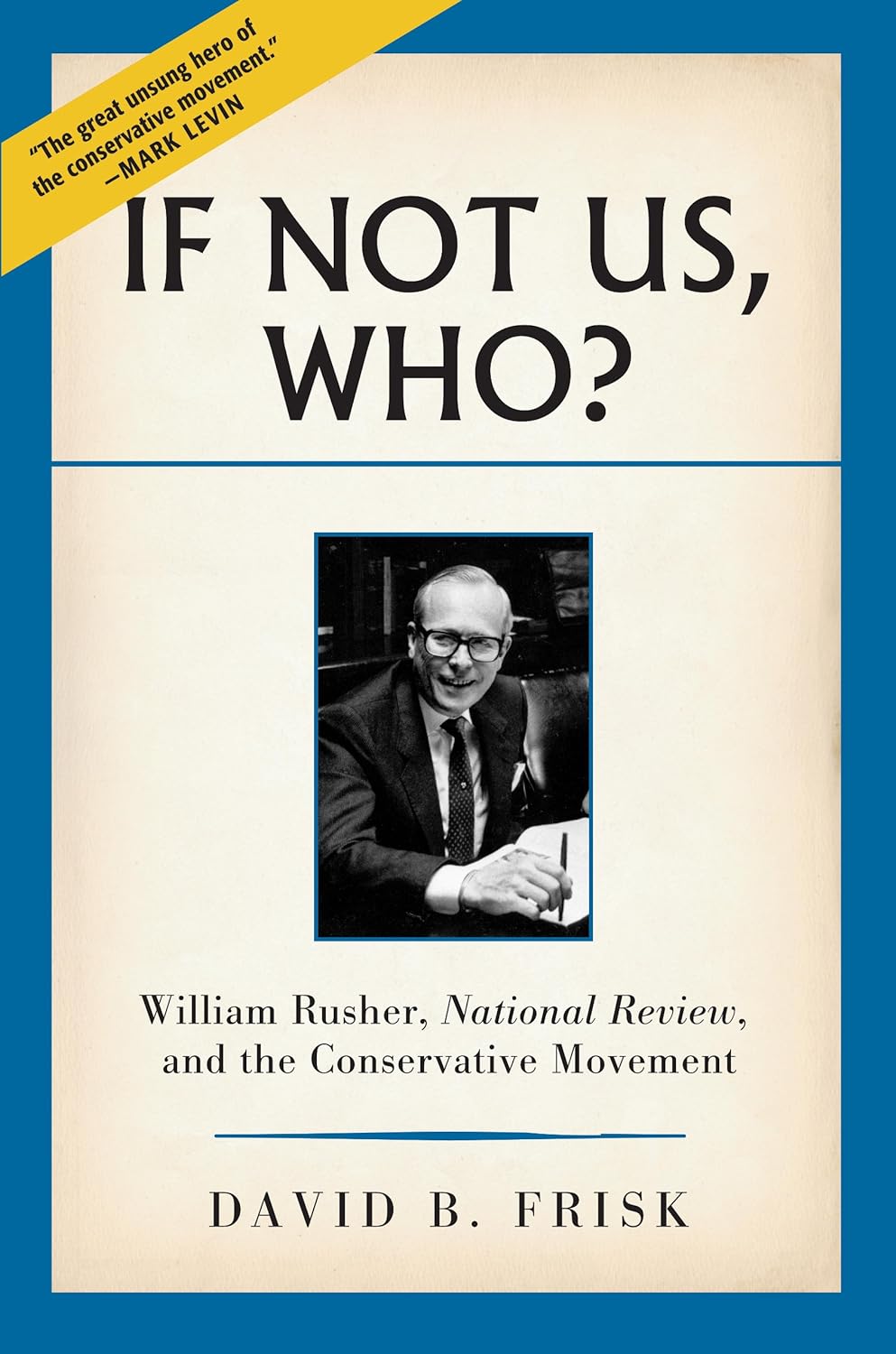
“If Not Us, Who?”

by | About Bill, Articles, Featured

If Not Us, Who? takes you on a journey into the life of William Rusher, a key player in shaping the modern conservative movement. Known for his long stint as the publisher of National Review, Rusher wasn’t just a publisher—he was a crucial strategist and thinker in the historic rise of conservatism.

In David B. Frisk’s biography, he dives into Rusher’s extensive papers and interviews with insiders, giving us a fresh look at a career that hasn’t been thoroughly explored before. The story paints a vivid picture of the political landscape spanning over fifty years, filled with hopes, fears, and controversies.

Frisk skillfully brings out the details of Rusher’s time at National Review, revealing a mix of wit, dedication, shrewdness, and earnestness that made him a standout figure. The biography also shines a light on Rusher’s intricate relationship with the legendary Buckley, highlighting his role as a vital link between conservative thinkers and political doers.

The motto often linked to Ronald Reagan, “If not us, who? If not now, when?” perfectly sums up Rusher’s approach, echoing through every aspect of his work. Whether it was publishing National Review, advising political candidates, or participating in televised debates, Rusher was all about building a movement. His relentless efforts played a pivotal role in steering conservatism upward, from the influential Goldwater campaign to the era of Reagan.

Rusher’s career acts as a window into the conservative movement’s history, offering insights into both its triumphs and setbacks. Frisk’s comprehensive biography introduces us again to an extraordinary man of thought and action, highlighting a crucial chapter in the evolution of American conservatism. William Rusher isn’t just a publisher in this story; he’s a dynamic force whose impact echoes in the enduring legacy of the conservative movement.

Author

  • David B. Frisk, Ph.D., is the author of If Not Us, Who? William Rusher, National Review, and the Conservative Movement (ISI Books, 2012), and a resident fellow at the Alexander Hamilton Institute for the Study of Western Civilization, where he teaches courses in history and political science. He is writing an intellectual biography of the conservative political theorist Willmoore Kendall—a mentor and colleague of Buckley’s—for Encounter Books.

    View all posts

Recent Articles

Justice Clarence Thomas Reflects on Progressivism, April 15, 2026

Clarence Thomas — full remarks on progressivism, its foundations, history, and impact from his appearance at University of Texas at Austin: “Stalin, Hitler, Mussolini, and Mao were all intertwined with the rise of progressivism, and all were opposed to the natural...

Rusher’s Wise, Vital Voice at National Review

“Bill Rusher is every bit as vital to National Review as I am,” William F. Buckley informed the audience at the magazine’s 20th anniversary dinner in 1975. “Tonight he has been trenchant, which he always is; and diplomatic, which usually he isn’t. In contrast to his...

Conservatism v. Progressivism

Who We Are: What is Conservatism? Conservatives in America seek to conserve the political inheritance of our Founders. That inheritance is a system of governance premised on the unchanging nature and God-given sovereignty, equality,...

A Model of Political Effectiveness: How Rusher Did It

William Rusher strengthened the conservative movement as an energizing leader, a formidable debater, an incisive columnist, and an engaged mentor who made things happen.  His success in these multiple roles makes his career a rich lesson in political...

Quotes on Progressivism: Definitions and Distinctions

Gathered and prepared by David Frisk “What, then, is progressivism? … we can think of it as an argument to progress, or to move beyond, the political principles of the American founding. It is an argument to enlarge vastly the scope of national government for the...

The Quotable Bill Rusher Part 2: From His Books

Special Counsel (1968) “… a steady diet of political infighting tends to coarsen, and ultimately to cheapen, most participants. They approach politics as reasonably honorable citizens, and by imperceptible degrees it sucks them into its vortex. The plainly right...