
Goldwater vs. Kennedy and Johnson

by | Quotes

“… Goldwater’s popularity as a conservative candidate stemmed in very substantial part from the sharp contrast between his personal and political qualities and those of John Kennedy. Time, and the poignant fact of Kennedy’s subsequent assassination, have softened and sanctified our memories of the man; but two decades ago he was a living, breathing politician, not an icon, and a great many people were prepared to consider an alternative in 1964. Kennedy was from … the Northeast, and connoted many qualities associated with it: Harvard, great wealth, sophistication, and political liberalism. Goldwater hailed from … the opposite and newest corner of the nation, the Southwest, and personified most of the human characteristics associated with its people: a sort of rugged, earthy, manly innocence… Kennedy’s sudden replacement by Johnson, therefore, was little short of a disaster for Goldwater’s hopes of election … Instead of confronting a northeasterner, with whom he could contrast spectacularly and perhaps to advantage, Goldwater would now be pitted against a fellow southwesterner … from a background not merely less opulent than Kennedy’s, but dirt poor. Worst of all, Johnson, despite his political origins in FDR’s New Deal, was identified, and rightly, with the relatively conservative southern wing of the Democratic party … Goldwater and his managers would never be able to persuade most Americans that Lyndon Johnson represented any of the new tendencies in the country which so many of them feared and opposed.”

Source: The Rise of the Right (1984)

Keywords: elections,campaigns,biography
Author

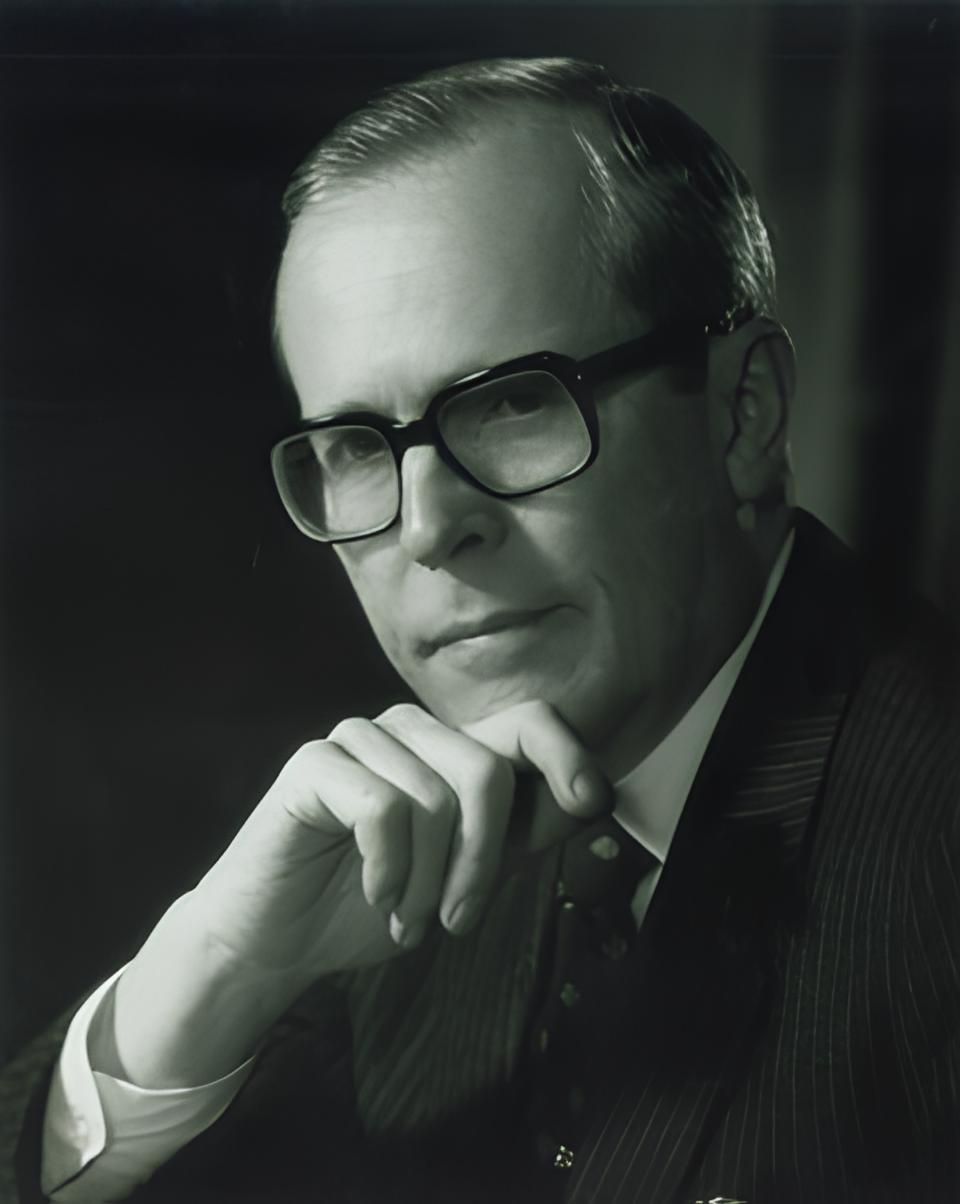
  • William A. Rusher (1923–2011), publisher of National Review (1957–1988), was a leading conservative spokesman, columnist, and author. He helped draft Barry Goldwater for the 1964 GOP nomination, shaping the party’s future. A Princeton and Harvard Law graduate, he served in WWII, worked in law, and advised the U.S. Senate. In 1989, he became a Distinguished Fellow at the Claremont Institute and remained active in conservative circles until his passing in 2011.

    View all posts

Recent Articles

Justice Clarence Thomas Reflects on Progressivism, April 15, 2026

Clarence Thomas — full remarks on progressivism, its foundations, history, and impact from his appearance at University of Texas at Austin: “Stalin, Hitler, Mussolini, and Mao were all intertwined with the rise of progressivism, and all were opposed to the natural...

Rusher’s Wise, Vital Voice at National Review

“Bill Rusher is every bit as vital to National Review as I am,” William F. Buckley informed the audience at the magazine’s 20th anniversary dinner in 1975. “Tonight he has been trenchant, which he always is; and diplomatic, which usually he isn’t. In contrast to his...

Conservatism v. Progressivism

Who We Are: What is Conservatism? Conservatives in America seek to conserve the political inheritance of our Founders. That inheritance is a system of governance premised on the unchanging nature and God-given sovereignty, equality,...

A Model of Political Effectiveness: How Rusher Did It

William Rusher strengthened the conservative movement as an energizing leader, a formidable debater, an incisive columnist, and an engaged mentor who made things happen.  His success in these multiple roles makes his career a rich lesson in political...

Quotes on Progressivism: Definitions and Distinctions

Gathered and prepared by David Frisk “What, then, is progressivism? … we can think of it as an argument to progress, or to move beyond, the political principles of the American founding. It is an argument to enlarge vastly the scope of national government for the...

The Quotable Bill Rusher Part 2: From His Books

Special Counsel (1968) “… a steady diet of political infighting tends to coarsen, and ultimately to cheapen, most participants. They approach politics as reasonably honorable citizens, and by imperceptible degrees it sucks them into its vortex. The plainly right...